The Domotex Asia/ChinaFloor Trade Fair in 2023 marks a significant milestone as it is the first trade exhibition that has opened its doors to international visitors since the widespread lockdowns imposed during the COVID-19 pandemic in 2020. This event has witnessed a modest resurgence, with a noticeable increase in the number of foreign attendees and global flooring buyers participating compared to previous years. However, it is important to acknowledge that the lingering effects of the global economic slowdown mean that it will take additional time for participation rates to return to the levels seen before the pandemic disrupted normal business operations.
Despite these challenges, there are encouraging signs for the future. A wide array of prominent global brands specializing in resilient flooring, laminate flooring, and carpet tiles have chosen to showcase their products at this year’s fair. Their presence indicates a continued interest in sourcing opportunities within China, suggesting that there is still a positive outlook for the industry moving forward. The participation of these major players not only highlights the importance of the Chinese market but also reflects a growing confidence among international businesses in resuming trade activities and exploring new partnerships in the post-pandemic landscape.
In summary, while the road to full recovery may be gradual, the 2023 Domotex Asia/ChinaFloor Trade Fair serves as a beacon of hope for the flooring industry, demonstrating resilience and adaptability in the face of ongoing global challenges.
Major Topics at Domotex Asia ChinaFloor
Over the course of a three-day event, an impressive lineup of more than 30 seminars was conducted, featuring a diverse array of speakers hailing from various sectors within the architecture and design industries. These included professionals from renowned architecture firms, innovative interior designers, representatives from major brands, manufacturers, industry consultants, academics, and members of pertinent industry associations.
The seminars covered a wide range of significant topics that are currently shaping the industry. Key discussions revolved around cross-border communication within the supply chain of the industry, exploring how different regions can collaborate effectively. Additionally, there were in-depth explorations of interior design applications that cater to modern needs, advancements in material engineering, the concept of building industrialization, and the growing trend of smart home living, which integrates technology into everyday spaces for enhanced convenience and efficiency.
One particularly noteworthy theme that emerged during the keynote speeches was the emphasis on multi-dimensional and multi-functional spatial design. This concept reflects a shift in consumer preferences, as individuals increasingly seek interior designs that serve multiple purposes, especially in densely populated urban environments where space is often at a premium. The idea is to create living spaces that are not only aesthetically pleasing but also adaptable to various functions, thereby maximizing utility without compromising style.
Another critical topic that garnered attention was the importance of quality living through the use of green decorative products. Industry leaders are actively advocating for practices that promote low carbon emissions and strive for carbon neutrality in the production processes of various building materials. This focus on sustainability highlights a collective effort within the industry to reduce its environmental footprint while still delivering high-quality products that meet consumer demands.
Lastly, as consumer behaviors continue to evolve rapidly, there is a pressing need for more convenient and efficient remodeling solutions in interior design. The fast-paced nature of modern life requires interiors that can be easily updated or transformed to reflect changing tastes and lifestyles, prompting designers and manufacturers to innovate and offer flexible options that cater to this dynamic market. Overall, the event served as a vital platform for discussing these trends and challenges, fostering collaboration and knowledge sharing among industry professionals.
What are the Major Resilient Flooring Manufacturers up to?
During our recent visit to the 2023 Domotex Asia expo, we made some intriguing observations regarding the strategies employed by manufacturers of resilient vinyl flooring. It became evident that these manufacturers generally adopt one of two distinct approaches. The first strategy centers around expanding their supply chains and establishing manufacturing facilities in various locations, notably in countries like Vietnam, Thailand, and Mexico. This approach is often driven by the desire to optimize production capabilities and reduce effect of tariff through geographical diversification. On the other hand, the second strategy emphasizes the innovation and development of new products within the realm of resilient flooring. This focus on product development aims to meet evolving consumer demands and stay competitive in a rapidly changing market.
Interestingly, we noted that these two strategic directions are not typically pursued concurrently by most resilient flooring manufacturers. In fact, it appears that only the top-tier suppliers—those capable of shipping over a thousand containers each month—have managed to successfully combine both strategies. These leading suppliers have expanded their factory operations internationally while simultaneously investing in resilient flooring innovation and product lines, thereby positioning themselves as frontrunners in the industry.
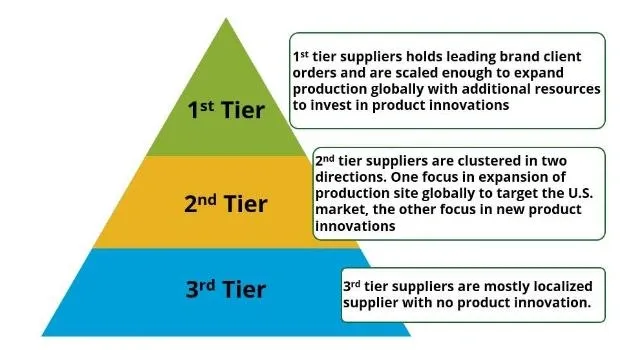
In contrast, our observations indicated that many Chinese suppliers who have opted to expand their production facilities abroad tend to offer only standard flooring products, specifically in Luxury Vinyl Tile (LVT) and Stone Plastic Composite (SPC). This suggests a more conservative approach focused primarily on maintaining existing offerings rather than innovating or diversifying their product range. Furthermore, we also noticed that suppliers from Korea and Vietnam exhibited a similar trend at the exhibition, showcasing predominantly standard LVT and SPC products without venturing into more innovative new material applications.
Overall, this dichotomy in strategic focus among resilient vinyl flooring suppliers highlights the varying priorities within the industry, with some companies choosing to enhance their operational footprint while others concentrate on product innovation. As the market continues to evolve, it will be interesting to see how these strategies develop and whether more suppliers will seek to integrate both expansion and innovation into their business models.
Global Trend for Vinyl-Free Movements
Vinyl-Free Floorings are emerging as a significant trend in product development within the flooring industry. This shift is not merely a passing fad; it reflects a broader movement among manufacturers to embrace more sustainable materials. We are witnessing top-tier suppliers actively introducing vinyl-free luxury vinyl tiles (LVT) and vinyl-free stone plastic composite (SPC) options. Furthermore, reports indicate that leading flooring brands are now seeking exclusive sales rights for these innovative products. This strategic maneuver suggests that these companies are keen on phasing out traditional PVC-based flooring solutions in favor of more environmentally friendly alternatives, thereby positioning themselves as leaders in this evolving market.
The global landscape of flooring is shifting towards various vinyl-free polymer alternatives, with two primary directions currently being explored: one involves polymers based on polyethylene terephthalate (PET), while the other focuses on polypropylene (PP). The competition between these two materials remains uncertain, as different major brands have opted for distinct materials and associated suppliers, each aligning with their unique business strategies and sustainability goals.
Experts predict that the trend towards vinyl-free LVT and SPC will dominate the industry in the coming years. In fact, recent observations from the Cologne Expo in Germany reveal that over half of the participating flooring brands showcased non-PVC flooring options instead of the conventional PVC-based products. This significant representation underscores a collective commitment to innovation and environmental responsibility within the flooring sector. As consumer preferences increasingly lean towards sustainable choices, it is clear that the future of flooring will likely be defined by these vinyl-free alternatives, marking a pivotal moment in the industry’s evolution.
Resilient Flooring Manufacturers based in China are developing PVC-free Compositions
The Chinese supply chain is primarily concentrated on the advancement of new material applications, with a specific focus on aligning with potential environmental regulations that could significantly impact the market for PVC flooring products, such as luxury vinyl tiles (LVT), stone plastic composite (SPC), and homogeneous vinyl flooring.
Historically, Chinese manufacturers have experienced swift growth fueled by international trade, leading to the establishment of numerous production facilities designed to cater to the increasing demand for resilient PVC flooring options. However, the extensive scale of their mass production capabilities has resulted in a limitation regarding the processing of polymers. Consequently, when faced with the impending restrictions on PVC use, these manufacturers are strategically pivoting towards utilizing alternative polymers that can be integrated into their existing production equipment. This approach contrasts sharply with the exploration of alternative natural materials, which has not been observed among local suppliers in China at this time.
This strategic shift highlights a broader trend within the industry, where manufacturers are seeking to adapt to changing regulatory landscapes while maintaining operational efficiency. The reliance on alternative polymers suggests a desire to innovate within the confines of current manufacturing processes rather than embarking on a complete overhaul of production methods. As environmental concerns continue to rise globally, it will be crucial for these manufacturers to remain agile and responsive to both market demands and regulatory pressures, ensuring that they can sustain their competitive edge in the evolving flooring market.
Why China is still the most attractive place to buy Floorings when it comes to global brands?
In today’s interconnected world, globalization and international trade play a crucial role in enhancing the competitive edge of flooring brands and distributors. One country that stands out as a focal point in global manufacturing is China. Despite the challenges posed by a significant 25% import tariff imposed by the United States, China continues to be an incredibly appealing destination for businesses in the flooring industry.
This attraction can be attributed to several factors, most notably China’s vast manufacturing capabilities and the dense concentration of flooring industry clusters within its borders. These clusters enable manufacturers to operate at an unprecedented scale, resulting in lower production costs and higher efficiency. Consequently, this unique combination of price competitiveness and quality craftsmanship makes it exceedingly difficult for any other nation to rival China’s dominance in the flooring market.
Moreover, the sheer size of China’s manufacturing sector allows for rapid innovation and adaptation to changing market demands, further solidifying its position as a leader in the industry. As companies seek to optimize their supply chains and reduce costs, many find that sourcing from China remains a strategic choice, despite the tariffs. In essence, the benefits derived from China’s manufacturing prowess far outweigh the challenges posed by trade barriers, making it a vital player in the global flooring landscape.
Competition between PP-Flooring and PET Flooring
Numerous first-tier and second-tier resilient flooring manufacturers in China are actively engaged in the development of PVC-free luxury vinyl tiles (LVT) and stone plastic composite (SPC) flooring options. However, despite these advancements, there has been a noticeable lack of significant market presence for vinyl-free resilient flooring products from leading brands in the industry.
Two critical factors are currently influencing this situation. The first factor pertains to the material costs associated with alternative polymers that do not contain vinyl. These non-vinyl materials may present higher production expenses, which can deter manufacturers from fully committing to their development and marketing. The second consideration revolves around the performance quality of flooring made from polypropylene (PP) or polyethylene terephthalate (PET). It is essential for these materials to meet or exceed the durability, aesthetic appeal, and overall performance standards that consumers expect from traditional vinyl flooring options.
As a result, while there is ongoing innovation in creating sustainable flooring solutions, the challenges related to cost and performance must be addressed before vinyl-free resilient flooring can gain traction in the mainstream market. This situation highlights the need for further research and development to enhance the viability of these alternatives, ensuring they can compete effectively with established vinyl products.